
Witness Services
Witnessing Documents
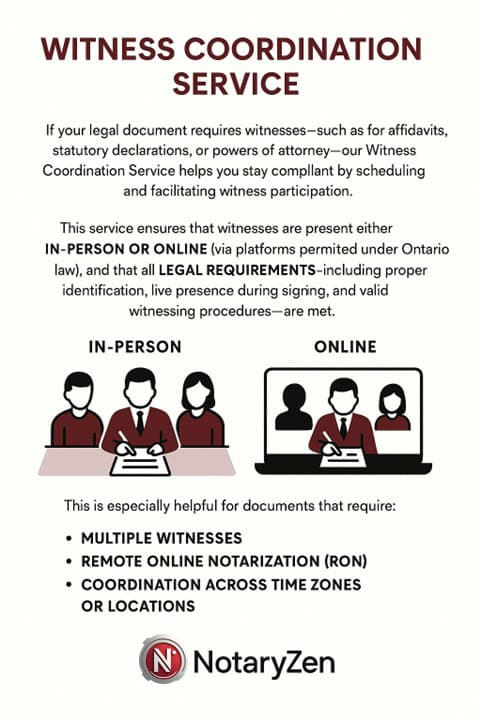
Pros of a Notary Witnessing and Signing Your Documents
Legal Validity: A notary public's signature and seal confirm that a document was signed willingly and properly witnessed, making it legally recognized and harder to dispute. Fraud Prevention: Notaries verify identities and ensure parties are signing voluntarily, reducing the risk of fraud, coercion, or identity misuse. International Acceptance: Notarized documents are often required for use abroad, especially when combined with an Apostille or legalization, ensuring cross-border credibility. Evidentiary Strength: A notarized document may carry more weight in court as it provides verified proof of execution and witness. Compliance with Legal or Institutional Requirements: Many institutions (banks, courts, government bodies) mandate notarization for certain documents like affidavits, powers of attorney, and property transactions.
Affirmation vs. Oath: What's the Difference?
Oath: A solemn promise invoking a higher power (e.g., God). Used by individuals with religious beliefs. Includes references to God or a deity. Legal standing: equal — both are legally binding declarations.
Affirmation: A non-religious solemn declaration. Used by individuals with no religious beliefs or preferences. Secular, no religious references. Legal standing: equal — both are legally binding declarations.
Essentials for Notaries When Administering Either
Verify Identity
Confirm identity using valid photo ID (passport, driver's licence, etc.).
Ensure Voluntariness
Make sure the individual is not under duress and is signing willingly.
Ask Their Preference
Ask: "Do you wish to swear an oath or affirm the truth of your statement?"
Administer Proper Statement
Use the appropriate wording.
Sign and Date
Have the declarant sign the affidavit in your presence; you sign and stamp.